Article: How to Measure a Pre-Owned Show Coat for a Good Fit
How to Measure a Pre-Owned Show Coat for a Good Fit
Barn Notes
Buying a used show coat online? Here's how to measure yourself, measure a coat laid flat, compare the numbers, check the fit in the saddle, and know what a tailor can fix.
A show coat that fits well looks sharp in the ring and lets you ride without thinking about it. When you're shopping for a used show coat online, you can't slip it on first, so a tape measure becomes your best friend. Here's how to measure yourself, how to measure a coat laid flat, and how to tell whether a pre-owned show coat will work for you.
Start with you: how to measure yourself
Grab a soft tape measure and a helper if you can. Wear the show shirt you ride in (and the same undergarments), stand relaxed, and keep the tape snug but not tight.


Chest
Around the fullest part of your chest or bust, under your arms, keeping the tape level across your back.
Waist
Around your natural waist, the narrowest part of your torso, usually just above your belly button.
Hips
Around the fullest part of your hips and seat. Many European brand charts list a hip measurement, so it's worth having.
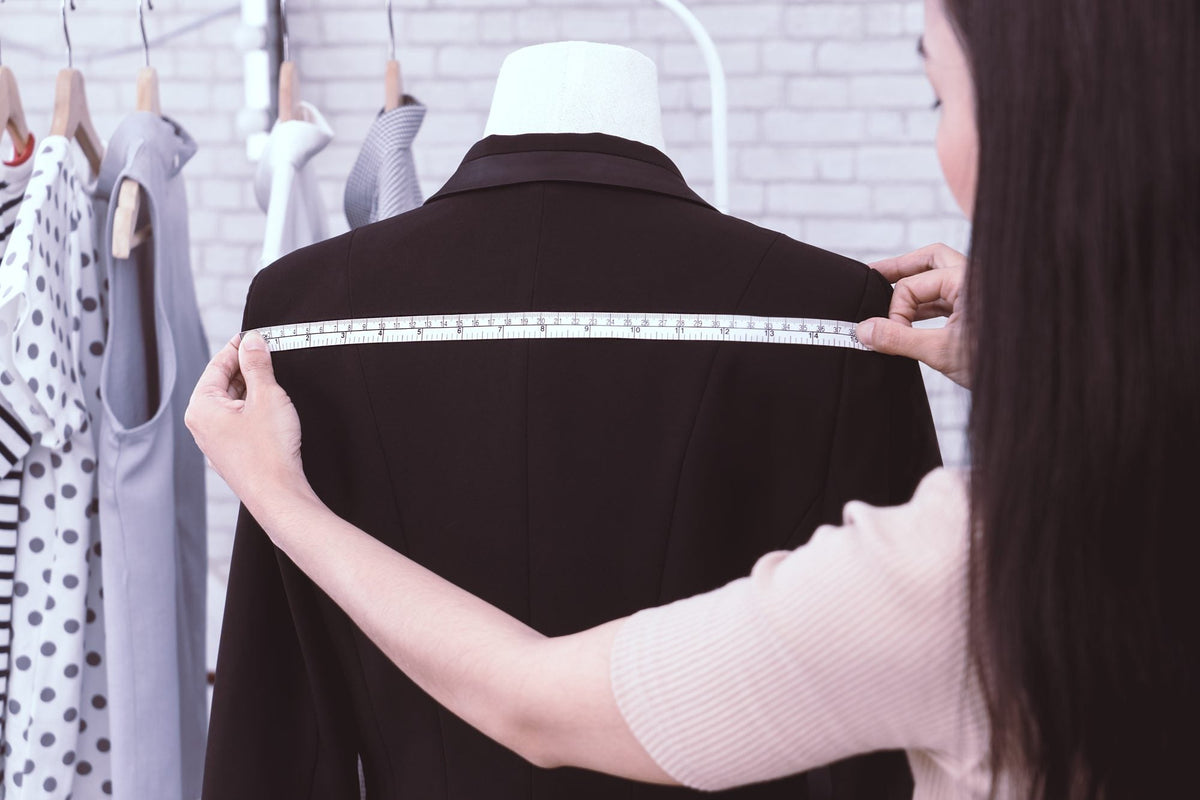
Shoulders
Across your back from the point of one shoulder to the point of the other.
Sleeve
Brands measure this two ways. Most often it's from the point of your shoulder, over a bent elbow, to your wrist bone. Some guides start at the center of the back of your neck instead, which gives a longer number. Check which one the size chart uses before you compare.
Back length
From the base of your neck (the small bone at the nape) down your spine to where you'd like the coat to end.
Write the numbers down. Even better, measure a coat you already own and love the fit of. That's often the most useful comparison of all.
How to measure a coat laid flat
Lay the coat on a flat surface, buttoned, with the front smoothed out and no wrinkles.


Chest
Measure straight across from armpit to armpit (pit to pit), then double it.
Waist
Measure straight across at the narrowest point, then double it.
Shoulders
From one shoulder seam to the other, across the back.
Sleeve
From the shoulder seam to the end of the cuff.
Back length
Turn the coat over and measure from the collar seam at the center back down to the hem.
Hips (optional)
If the coat flares over the hips, measure straight across the hem area and double it, so you can compare it with your hip measurement.
How to compare the coat's numbers to yours
First, know what you're comparing. Most brand size charts list body measurements (yours), while laid-flat numbers are garment measurements (the coat's). A coat should measure somewhat bigger than your body around the chest, waist and hips. That extra room is called ease, and it's what lets you breathe and move. How much ease is right depends on the brand, the cut and the fabric, so treat this as general guidance, not a guarantee:

Your favorite coat is the best yardstick.
- Your favorite coat is the best yardstick.Lay a coat that fits you well flat, measure it the same way, and compare those numbers to the listing. That's more reliable than any rule of thumb.
- Stretch vs. wool:Technical stretch coats give with you, so many are cut close to the body and need less extra room. Traditional wool coats don't stretch, so they need more room to move in the saddle.
- Chest:Too little room and the coat will pull at the buttons. Too much and it will look boxy.
- Waist:Look for enough room that the coat skims rather than grips when you're seated.
- Shoulders:Aim for close to your own shoulder measurement. This is the hardest fit point to change later, so give it the most weight.
- Sleeve:Riding arms reach forward, so a sleeve that seems a touch long standing often looks right in the saddle.
- Back length:Compare with a coat you like. Lengths vary by brand and discipline, and some European show jumping styles are cut shorter.
If you're between sizes, let the shoulders and chest decide, and ask us or check the brand's guidance. Brands differ on whether to size up or down.
Fit checks in the saddle
Once your coat arrives, try it on and get into riding position, on a horse or a saddle stand if you can.

- 1Shoulder seam sits at the edge of your shoulder
- 2Back stays smooth across the shoulder blades
- 3Sleeve still reaches your wrist bone, arms forward
-
Reach
Hold your hands out as if holding the reins. The back shouldn't pull tight across your shoulder blades, and the sleeves should still reach about your wrist bone. Whether a little shirt cuff shows is a matter of preference, so ask your trainer.
-
Rising trot
Post a few strides (or mimic it). The back of the coat shouldn't ride up or bunch, and the front buttons shouldn't pull or pucker.
-
Back length over the saddle
Seated, the back hem or vent should just lightly brush the saddle, not get caught under your seat or bunch up behind you.
-
Shoulders with arms forward
The shoulder seams should line up with the edges of your shoulders, with no pulling over the tops of your arms or deep wrinkles across the upper back. Try crossing your arms in a self-hug. If you can do it without feeling restricted, the shoulders are in good shape.
What a tailor can and can't fix
A good tailor can make a nearly-right coat feel made for you, but some things are hard to change.
Usually fixable
- Shortening sleeves
- Letting sleeves out a little, but only if there's extra fabric tucked inside (often about half an inch)
- Taking in the waist
Usually not fixable
- Shoulders that are too narrow. A skilled tailor can sometimes take in shoulders that are a little wide, but it's major work.
- Coat length and the hemline, especially making a coat longer
- A chest that's too small
So buy for your shoulders, chest and length, and let a tailor handle the rest. Stretch fabrics, bonded or laser-cut seams and crystal trim can limit what's possible, so ask a tailor who knows technical fabrics before you count on an alteration.

Find your next coat, or pass one on
Shop all show coats and jackets, including pre-owned coats, equestrian show jackets for women and the ALE Sample Collection. Have a coat that no longer fits? Consign your show coat and it can go to another rider. Consignment keeps good show clothes in the ring.
FAQ
Does Tack & Tweed measure every show coat?
No. We take laid-flat measurements on select show coats, mainly higher-end coats and new arrivals. Where a listing shows laid-flat measurements, use them. Otherwise check the brand's size chart, try the "Find your size" link, or email hello@tackandtweed.com.
How should a show coat fit?
Snug but not tight. The shoulder seams line up with the edges of your shoulders, the front buttons without pulling, the back lies flat, and you can reach forward and post comfortably.
Can a tailor fix a show coat that's too small?
Usually not in the chest or shoulders, and making a coat longer is hard too. Shortening sleeves and taking in the waist are usually easier.